
Tuina (pronounced twee-nah) is a traditional hands-on therapy within Traditional Chinese Medicine that combines manual techniques with the principles of acupuncture and meridian theory to restore balance, relieve pain, improve mobility, and support the body’s natural capacity for healing.
At Elora TCM Clinic, Tuina is thoughtfully incorporated into individualized treatment plans when clinically appropriate. Every treatment is guided by your Traditional Chinese Medicine diagnosis, allowing techniques to be tailored to your unique presentation, constitution, and health goals.
Tuina, meaning “push and grasp,” is one of the oldest therapeutic modalities within Traditional Chinese Medicine and has been practiced for thousands of years.
Unlike relaxation massage, Tuina is a therapeutic treatment based on Traditional Chinese Medicine principles. Using a variety of specialized techniques—including rolling, kneading, pressing, grasping, stretching, mobilization, and acupressure—Tuina works along the meridians and acupuncture points to encourage the smooth circulation of Qi and Blood and restore balance throughout the body.
Treatment may be gentle and calming or more dynamic and invigorating depending on your diagnosis and treatment goals.
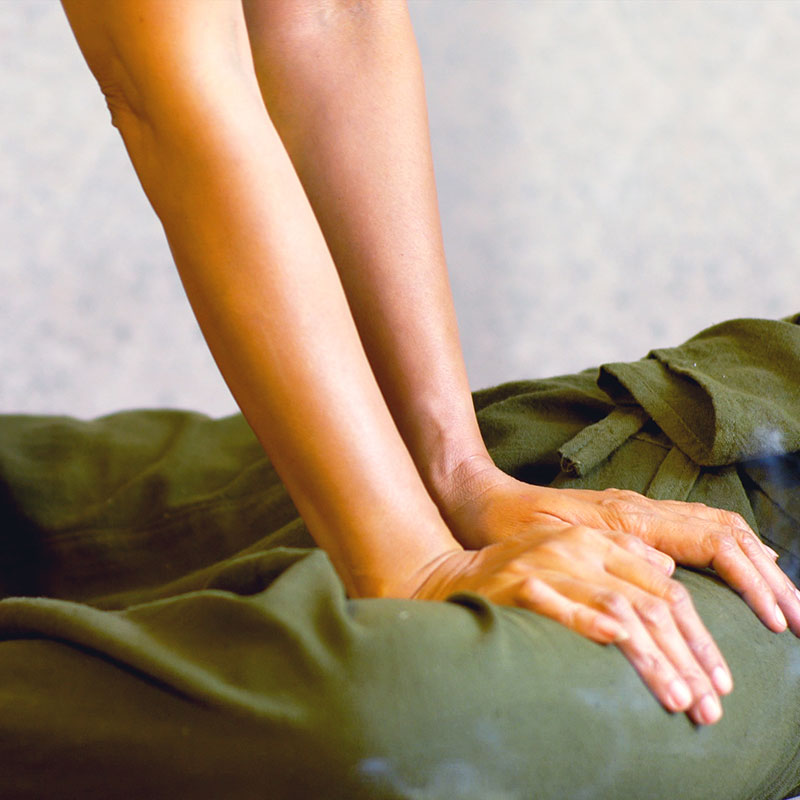
From a Traditional Chinese Medicine perspective, Tuina helps regulate the flow of Qi and Blood, open the meridians, disperse stagnation, harmonize the Zang-Fu organ systems, and restore balance throughout the body.
From a biomedical perspective, manual therapy may help reduce muscular tension, improve joint mobility, enhance circulation, influence connective tissue, support the nervous system, and encourage the body’s natural healing response.
Following your Traditional Chinese Medicine assessment, we’ll determine whether Tuina is appropriate for your treatment plan.
Treatment is performed using the practitioner’s hands, fingers, palms, forearms, and elbows to apply a variety of therapeutic techniques to specific muscles, joints, meridians, and acupuncture points.
Depending on your diagnosis, treatment may focus on relieving muscular tension, improving mobility, calming the nervous system, or restoring the smooth circulation of Qi and Blood.
Many patients describe Tuina as both therapeutic and deeply restorative.
Is Tuina the same as a relaxation massage?
No. Although Tuina uses hands-on techniques, it is a therapeutic treatment based on Traditional Chinese Medicine rather than a spa or relaxation massage. Every treatment is guided by your Traditional Chinese Medicine diagnosis and individualized health goals.
Does Tuina hurt?
Most people find Tuina comfortable and highly effective. Depending on the condition being treated, some techniques may feel more invigorating than others, but treatment is always adapted to your comfort level.
Can Tuina be combined with acupuncture?
Absolutely. Tuina is frequently combined with acupuncture, cupping, Gua Sha, or moxibustion as part of a comprehensive Traditional Chinese Medicine treatment plan. These therapies work together to restore balance, promote the circulation of Qi and Blood, and support your body’s natural capacity for healing.
Tuina is a unique hands-on therapy that reflects the depth and sophistication of Traditional Chinese Medicine.
Whether incorporated into your acupuncture treatment or provided as part of a comprehensive care plan, Tuina offers a gentle yet effective way to restore movement, reduce pain, promote relaxation, and support your overall health and wellbeing.